SEO vs PPC: Which Strategy Delivers Better ROI?
SEO and PPC represent fundamentally different approaches to search visibility, each delivering distinct return on investment. Research from Nine Peaks Media shows SEO generates a minimum 500% ROI over 6-12 months, while PPC typically delivers 200% ROI with immediate results. The superior choice depends on your timeline, budget, and business objectives. SEO builds compounding organic traffic that continues generating leads without ongoing ad spend, whereas PPC provides instant visibility that stops the moment you pause campaigns.
Many businesses waste thousands monthly on the wrong strategy. Some dump \$5,000 into Google Ads, watching their budget evaporate the second they pause campaigns. Others invest six months into SEO with zero traffic to show for it, wondering what went wrong.
You'll discover exactly when each strategy delivers maximum ROI, backed by 2025 performance data across industries. The true costs, conversion rates, and timelines for both approaches reveal how combining them creates the ultimate competitive advantage. By the end, you'll know precisely which strategy matches your business situation and how to allocate your budget for optimal returns.
What Is SEO and How Does It Generate ROI?
Search Engine Optimization (SEO) involves optimizing your website to rank higher in organic search results without paying for each click. Data from Semrush shows 92% of global traffic comes from Google, making organic visibility crucial for sustainable growth.
SEO works by improving three core elements: content quality, technical performance, and authority signals. You create valuable content targeting specific search queries, ensure your website loads quickly and functions properly, then build credibility through backlinks from authoritative sites.
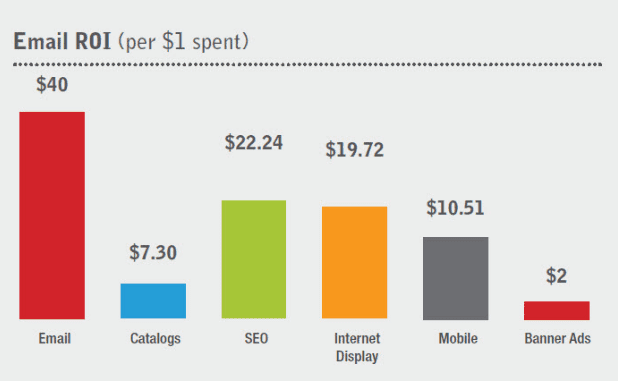
The ROI mechanism differs fundamentally from paid advertising. SmartInsights reports that businesses earn an average of over \$22 for every dollar spent on SEO. This exceptional return stems from the compounding nature of organic rankings.
Once your content ranks, it continues attracting visitors without additional cost per click. A single blog post ranking in position three can generate thousands of visits monthly for years. Traffic compounds as you publish more content, build more authority, and capture more keyword rankings. In practice, long-term organic growth is typically driven by execution quality and experience rather than channel mechanics alone.
At this stage, the real variable isn't SEO vs PPC — it's execution quality. Choosing the right SEO partner often determines whether organic growth compounds or stalls. Hire an SEO agency matched to your goals.
Research from FirstPageSage reveals dramatic ROI variations by industry:
| Industry | SEO ROI | Months to Breakeven |
|---|---|---|
| Real Estate | 1,389% | 13 months |
| Medical Devices | 1,183% | 10 months |
| Financial Services | 1,031% | 9 months |
| B2B SaaS | 702% | 7 months |
| E-commerce | 317% | 16 months |
The breakeven timeline matters significantly. Most businesses see initial results within 3-6 months, with substantial traffic gains appearing around month six. Peak performance typically arrives in year two or three as content library and authority compound.
SEO requires upfront investment in content creation, technical optimization, and link building. However, this creates an asset that generates returns long after initial investment. Understanding which affordable SEO tools can accelerate results helps maximize ROI while controlling costs.
What Is PPC and How Does It Deliver Results?
Pay-Per-Click (PPC) advertising operates on a fundamentally different model: you bid on keywords and pay each time someone clicks your ad. Statista projects that search advertising spending will reach \$483.5 billion by 2029, demonstrating massive market confidence in paid search.
The PPC auction system determines ad placement based on bid amount and quality score. Higher bids combined with relevant ads and landing pages secure top positions. You maintain complete control over budget, targeting, and messaging, with the ability to start, stop, or modify campaigns instantly.
WordStream's 2025 benchmarks reveal the average cost per click across industries is \$5.26. However, costs vary dramatically by sector:
| Industry | Average CPC | Cost Per Lead |
|---|---|---|
| Legal & Attorneys | \$8.58 | \$131.63 |
| Dentists & Dental Services | \$7.85 | \$95.00 |
| Home Improvement | \$7.85 | \$88.00 |
| Education & Instruction | \$6.23 | \$72.00 |
| Arts & Entertainment | \$1.60 | \$30.27 |
| Restaurants & Food | \$2.05 | \$35.00 |
| Travel | \$2.12 | \$38.50 |
These variations reflect different customer lifetime values and competition levels. Legal services justify high CPCs because a single client might generate \$10,000+ in revenue. Restaurants accept lower CPCs but need higher conversion volumes.
PPC delivers immediate visibility and measurable results. Campaigns can launch within hours, generating traffic by end of day. Every click, impression, and conversion tracks precisely, enabling real-time optimization. CROPink research found that Google Ads typically brings a return of \$8 for every \$1 spent, representing an 800% ROI.
The trade-off appears in sustainability. Traffic stops immediately when budget runs out. You're essentially renting visibility rather than building an owned asset. This makes PPC ideal for time-sensitive promotions, product launches, and situations requiring immediate lead flow.
As Cliff Sizemore, Senior Marketing Manager at LocaliQ, explains: "Costs are rising, but so is performance—65% of industries saw better conversion rates in 2025. The main takeaway here is that a smart strategy beats cheap clicks."
SEO vs PPC: Cost Comparison Over Time
SEO requires substantial upfront investment but costs decrease over time. PPC demands continuous spending, with costs remaining constant or increasing as competition intensifies.
Consider a 12-month investment of \$3,000 monthly in either strategy:
| Timeline | SEO Total Cost | SEO Monthly Leads | PPC Total Cost | PPC Monthly Leads |
|---|---|---|---|---|
| Month 1-3 | \$9,000 | 5-15 | \$9,000 | 80-120 |
| Month 6 | \$18,000 | 40-80 | \$18,000 | 80-120 |
| Month 12 | \$36,000 | 120-200 | \$36,000 | 80-120 |
| Month 18 | \$36,000 (stopped) | 200-300 | \$54,000 | 80-120 |
| Month 24 | \$36,000 (stopped) | 250-400 | \$72,000 | 80-120 |
SEO's compounding effect becomes apparent after six months. Leads continue growing even after stopping investment, whereas PPC lead flow flatlines and requires ongoing budget to maintain.
LocaliQ's benchmark study shows the average cost per lead for PPC sits at \$70.11 across industries. If you need 100 leads monthly, expect \$7,011 in ad spend. Sustaining this requires \$84,132 annually just to maintain the same lead volume.
SEO's cost per lead decreases over time as traffic compounds. Initial CPL might exceed \$200 in months 1-3, but drops to \$30-50 by month 12 and continues declining. The same \$36,000 annual investment potentially generates 2,000+ leads by year two without additional spending.
The crossover point typically occurs between months 6-9. Before this, PPC delivers superior ROI through immediate results. After this point, SEO's compounding returns surpass PPC's linear performance.
For comprehensive search visibility tools that track both channels effectively, consider exploring enterprise-grade SEO platforms like Semrush that offer integrated PPC analytics alongside organic tracking.
Which Strategy Delivers Faster Results?
Speed represents PPC's most compelling advantage. Campaigns launch within hours, generating clicks by end of day. Adcore's comparative analysis demonstrates that PPC traffic begins immediately upon campaign activation, while SEO typically requires 3-6 months for initial traction.
PPC's immediate visibility serves specific scenarios exceptionally well. Product launches benefit from instant traffic to gauge market response. Seasonal promotions capitalize on time-sensitive demand windows. Event marketing generates registrations within tight deadlines. Competitive campaigns counter rival messaging in real-time.
One expert explains: "Nothing creates urgency like a limited-time offer, especially during holidays when consumers hunt for the best deals. Flash sales and time-sensitive events require quick results."
SEO operates on a completely different timeline. Month one through three typically shows minimal traffic as search engines discover, index, and begin evaluating new content. Research from Nine Peaks Media indicates significant results emerge around month six, with peak performance arriving in year two or three.
This delay stems from how search algorithms work. Google must verify content quality, assess user engagement signals, and compare against established competitors. Authority builds gradually through backlinks, which take time to acquire naturally. Trust signals accumulate as content demonstrates lasting value rather than temporary relevance.
| Metric | PPC Timeline | SEO Timeline |
|---|---|---|
| First Results | Hours | 4-12 weeks |
| Meaningful Traffic | 1-7 days | 3-6 months |
| Sustainable Volume | Immediate (while budget lasts) | 6-12 months |
| Peak Performance | Immediate | 12-36 months |
| Results After Stopping | Zero (instant) | Continues growing |
The timeline question comes down to business urgency. If you need leads this week, PPC is your only viable option. If you're building for next year and beyond, SEO delivers superior long-term value.
However, conversion speed tells a different story. Reboot Online's research reveals organic search converts at 14.6% compared to PPC's 10%. Organic visitors spend more time evaluating content, arrive with higher intent, and demonstrate stronger purchase signals.
For businesses creating comprehensive content marketing strategies, this higher conversion rate compensates somewhat for SEO's slower traffic ramp-up.
Long-Term ROI: SEO vs PPC Performance
Long-term performance diverges dramatically between strategies. SEO builds value that compounds annually, while PPC costs remain constant or increase without creating owned assets.
According to Nine Peaks Media's 2025 analysis, SEO delivers 2.5x higher ROI long-term, with 500%+ returns over 6-12 months versus PPC's 200% average. This gap widens further in years two and three as organic traffic continues growing without proportional cost increases.
The compounding effect works through several mechanisms. Each piece of ranking content attracts backlinks, strengthening domain authority for all pages. Increased authority helps new content rank faster. Growing traffic generates more engagement signals, further boosting rankings. The content library creates comprehensive topical coverage that search engines reward.
Consider two businesses investing \$50,000 in year one:
SEO Investment:
- Year 1: 500 monthly leads by December
- Year 2: 1,200 monthly leads (no additional spend)
- Year 3: 2,000 monthly leads (minimal maintenance)
- Total leads: ~42,000
- Total cost: ~\$60,000
- Cost per lead: \$1.43
PPC Investment:
- Year 1: 600 monthly leads
- Year 2: 600 monthly leads (\$50,000 additional)
- Year 3: 600 monthly leads (\$50,000 additional)
- Total leads: ~21,600
- Total cost: \$150,000
- Cost per lead: \$6.94
The SEO scenario assumes modest growth and minimal ongoing investment. The PPC scenario maintains constant performance, which actually requires increasing budget as competition drives up CPCs.
HubSpot's research confirms organic search remains the #1 traffic source for websites, accounting for 53% of all web traffic compared to just 15% from paid search.
This traffic distribution reflects user trust. Data from Embryo Agency shows organic search accounts for 53% of website traffic because users trust unpaid results more than advertisements.
For small businesses looking to improve their online visibility without breaking the bank, this guide on how SEO for small businesses is better than paid ads breaks down budget conscious strategies with real world examples.
The customer lifetime value equation also favors SEO. Organic visitors typically demonstrate higher engagement, longer session durations, and stronger brand affinity. They discovered you through helpful content rather than interruption advertising, creating a more positive first impression.
For tracking long-term SEO performance alongside PPC campaigns, tools offering comprehensive analytics become essential. Platforms like Ahrefs provide historical ranking data that helps quantify compounding returns over time.
When Should You Choose SEO Over PPC?
SEO emerges as the superior choice in specific business situations where long-term growth outweighs immediate results. Choose organic search optimization when your business can absorb the 3-6 month ramp-up period and wants to build a sustainable traffic asset.
Ideal SEO scenarios include:
Established businesses with existing cash flow can invest in 6-12 month projects. You're not desperate for leads this quarter and can plan for growing traffic next year. The patient capital approach rewards you with decreasing customer acquisition costs over time.
Content-rich industries where helpful information drives purchase decisions benefit enormously. B2B services, education, healthcare, and complex products all see prospects researching extensively before buying. Demand Gen Report data reveals 44% of buyers consume 3-5 pieces of content before engaging a salesperson.
This pattern is especially visible in specialized B2B compliance searches, where companies often research GDPR, NIS2, ISO, DORA, or cybersecurity requirements before they are ready to contact a provider. A structured B2B compliance request can turn that early research-stage demand into a clearer conversation with a suitable service provider.
High CPC industries where paid clicks cost \$8-15 each see dramatic SEO advantages. Legal services, insurance, and B2B software pay premium rates for PPC traffic. Building organic rankings for these expensive keywords creates massive value. A single ranking position three for "business insurance" worth \$12 CPC generates equivalent value of \$36,000+ monthly in saved ad spend.
Competitive markets saturated with PPC advertisers often show opportunity gaps in organic results. When everyone bids on the same paid keywords, organic rankings become the differentiator. You can dominate page one organically while competitors fight over three ad slots.
Local businesses building community presence and trust benefit from local SEO's credibility signals. Google Business Profile optimization combined with local content creates authority that paid ads cannot replicate. Community members trust organic local results more than advertisements.
Content creators and publishers monetizing through affiliate marketing, advertising, or subscriptions absolutely require organic traffic. Paying for every visitor destroys unit economics. Organic traffic becomes the only viable business model.
Brand building for long-term market leadership works best through content and organic visibility. According to Business2Community research, marketers using both organic SEO and PPC advertising saw 25% more clicks and 27% more profit than single-channel approaches.
Your industry's buyer journey also determines SEO suitability. Long consideration periods with extensive research favor content marketing and organic rankings. Enterprise B2B sales cycles spanning 6-18 months align perfectly with SEO's timeline.
For businesses implementing SEO strategies, understanding current performance benchmarks helps set realistic expectations. 2025 SEO statistics and industry data provide context for evaluating progress.
When Does PPC Make More Sense Than SEO?
PPC becomes the optimal choice when speed, precision, or flexibility outweigh long-term asset building. Several business situations demand paid search's unique advantages.
Choose PPC when:
Immediate lead flow determines business survival. New businesses need revenue this month, not next year. Product launches require instant market feedback. Sales teams need qualified prospects now to hit quarterly targets. PPC delivers immediately where SEO cannot.
Time-sensitive campaigns promote limited offers, events, or seasonal products. Black Friday sales, holiday promotions, and conference registrations operate on strict deadlines. You cannot wait six months for organic rankings when the event occurs in six weeks.
Testing new markets, products, or messaging benefits from PPC's instant feedback. Launch campaigns, measure response within days, pivot based on data. This rapid iteration cycle helps validate ideas before committing to long-term SEO investment.
Highly specific targeting requirements exceed SEO's capabilities. Need to reach CFOs at \$50M+ manufacturing companies in Ohio? PPC's granular targeting options make this possible. Organic search cannot filter audiences with such precision.
Competitive defense against rivals bidding on your brand terms requires immediate response. If competitors advertise on your company name, PPC lets you reclaim that visibility instantly. Emarketer projects Google will garner over 70% of US traditional search ad spending in 2026, demonstrating continued advertiser confidence in paid search.
Short-term business needs like clearing excess inventory, filling service capacity, or hitting month-end quotas align with PPC's immediate results. Turn campaigns on to accelerate bookings, turn them off when targets are met.
Budget flexibility for testing and scaling matters when exploring new channels. PPC lets you test with \$500, evaluate results, then scale to \$50,000 monthly if profitable. SEO requires more committed upfront investment before seeing any returns.
Many businesses maximize their testing budget by working with performance marketing specialists who can optimize campaigns from day one. This approach often delivers faster time-to-profitability, especially in competitive industries where inefficient spending quickly drains budgets.
Businesses often see better results by working with teams that can coordinate SEO and PPC strategies under a unified plan. This approach prevents common inefficiencies like bidding on keywords you already rank for organically.
As an industry expert notes: "PPC is real-time. SEO is a long game. Put them together and you've got an early-warning and opportunity-detection system."
Businesses wanting complete control over messaging, offers, and positioning prefer PPC's flexibility. Change ad copy instantly based on market conditions. Test multiple value propositions simultaneously. React to competitor moves within hours.
For managing PPC campaigns effectively alongside organic initiatives, affordable rank tracking tools like SE Ranking help monitor both paid and organic performance from a single dashboard.
Can You Combine SEO and PPC for Better ROI?
Combining both strategies creates synergies that outperform either approach alone. Research cited by Reboot Online found that marketers using both organic SEO techniques and PPC advertising saw around 25% more clicks and 27% more profit than those who relied on a single technique.
The integrated approach works because each channel compensates for the other's weaknesses. PPC delivers immediate traffic while SEO builds long-term assets. SEO provides credibility and trust while PPC enables precise targeting and instant messaging control. Together, they dominate search results pages and maximize visibility.
Strategic integration delivers several advantages:
Double visibility occupies more search real estate. Ranking organically in position two while also showing paid ads in position one means your brand appears twice in viewport. Up Inc data shows 54% of all clicks go to the first three Google search results. Owning multiple positions increases total click share.
PPC data informs SEO strategy through real-time keyword performance insights. Paid campaigns reveal which keywords convert best, what messaging resonates, and how much traffic specific terms generate. Use this intelligence to prioritize SEO content creation. Test headlines in PPC before implementing in organic content.
SEO strengthens PPC quality scores through better landing page experience. Google rewards relevant, high-quality landing pages with lower CPCs. Strong organic content creates those quality pages, reducing paid advertising costs while improving conversion rates.
Budget allocation flexibility lets you shift resources based on performance. Start new campaigns with 70% PPC and 30% SEO for immediate results. As organic rankings improve, shift to 30% PPC and 70% SEO for efficiency. Seasonal businesses can dial PPC up during peak months while maintaining SEO year-round.
Most marketing experts recommend an integrated search strategy for optimal results. One study shows the combined approach creates these benefits:
| Benefit | Impact |
|---|---|
| Increased Total Clicks | +25% vs single channel |
| Higher Profit Margin | +27% vs single channel |
| Improved Brand Recall | +40% recognition |
| Lower Cost Per Acquisition | -35% after 12 months |
| Market Share Growth | 2.3x competitors |
The budget split evolves with business maturity. New websites might start with 70/30 favoring PPC for immediate visibility. Established sites often balance at 50/50. Mature sites with strong organic presence might shift to 30/70 favoring SEO while using PPC strategically.
Risk mitigation represents another compelling reason for integration. Algorithm updates, policy changes, or competitive shifts can impact either channel. Diversification across both reduces dependence on any single traffic source.
For implementing integrated search strategies, comprehensive platforms become valuable. Tools that cover both SEO and PPC like Mangools provide unified workflows for managing both channels efficiently.
How to Measure ROI for Both Strategies
Accurate ROI measurement requires tracking the right metrics for each channel while understanding their different value propositions. PPC provides immediate, precise data, while SEO demands patience and attribution modeling.
For PPC, track these critical metrics:
Cost per click reveals keyword efficiency. Compare actual CPC against industry benchmarks. WordStream reports average CPC is \$5.26, but ranges from \$1.60 to \$8.58 depending on industry. If you're paying above-average rates without proportionally better conversion rates, optimization is needed.
Conversion rate measures how effectively traffic converts to leads or customers. The average Google Ads conversion rate sits at 7.52% across industries. Calculate your rate by dividing conversions by total clicks. Rates below 3% signal landing page or targeting problems.
Cost per acquisition (CPA) represents your true efficiency metric. Divide total ad spend by number of customers acquired. Compare against customer lifetime value to ensure profitability. According to Promodo's benchmarks, average CPA across industries is approximately \$40-48 for search ads.
Return on ad spend (ROAS) quantifies campaign profitability. If you spend \$1,000 and generate \$4,000 in revenue, your ROAS is 4:1 or 400%. Most marketers target at least 4:1 as a healthy ratio. PPC's advantage is tracking this in real-time within the platform.
For SEO, measure these indicators:
Organic traffic growth tracks your primary success metric. Use Google Search Console to monitor clicks from organic search. Track month-over-month and year-over-year growth. Expect slow starts (months 1-3), acceleration (months 4-9), and compounding growth thereafter.
Keyword rankings indicate visibility progress. Track positions for target keywords weekly or monthly. Tools like Google Search Console provide this data free. Focus on top 10 positions, as 75% of users never visit page two according to HubSpot.
Organic conversion rate reveals traffic quality. Set up goals in analytics to track form submissions, purchases, or other conversions from organic traffic. Compare against PPC conversion rates. Research shows organic typically converts at 14.6% versus PPC's 10%.
Customer acquisition cost from SEO requires careful calculation. Add all SEO expenses (tools, content creation, link building) and divide by number of customers acquired through organic search. Track this monthly. Watch it decrease over time as traffic compounds.
Share of voice measures competitive positioning. Track how much search visibility you own versus competitors for your target keyword set. This metric helps quantify market share gains from SEO investment.
| Metric | PPC Benchmark | SEO Benchmark |
|---|---|---|
| Average Conversion Rate | 7-10% | 14.6% |
| Time to First Results | Hours to days | 4-12 weeks |
| Cost Stability | Constant/increasing | Decreasing over time |
| Traffic Sustainability | Stops when budget ends | Continues growing |
| Average ROI | 200-800% | 500-1,389% |
Attribution modeling becomes crucial for understanding true ROI. Many customers interact with both organic and paid results before converting. First-click attribution shows what started the journey. Last-click reveals what closed the deal. Multi-touch attribution distributes credit across all touchpoints.
The most sophisticated measurement tracks customer lifetime value by acquisition channel. If SEO customers have 30% higher LTV than PPC customers due to better fit and engagement, factor this into ROI calculations. The customer worth more delivers better ROI even if initial acquisition costs run higher.
SEO vs PPC: Which Is Right for Your Business?
The decision ultimately depends on your specific business situation, not universal "best practices." Analyze your circumstances against these decision factors to determine optimal strategy.
Choose SEO as your primary strategy if:
You can invest 6-12 months before needing significant results. Cash flow supports patient capital deployment. You're building for years two through five, not just this quarter. Your business model supports long-term thinking.
Your industry features high PPC costs (\$5+ per click) that make paid acquisition expensive. Legal, insurance, finance, and B2B services often see better returns from organic rankings than paid ads. Calculate whether your customer lifetime value supports sustained PPC spending.
Content marketing aligns with your expertise and resources. You can produce helpful, thorough content that addresses customer questions. Your team includes or can hire writers, strategists, and SEO specialists. You have a process for consistent content production.
Competitive analysis shows organic opportunity gaps. Your rivals dominate paid search but rank poorly organically. You can claim valuable positions they've neglected. Tools help identify these opportunities systematically.
Choose PPC as your primary focus if:
Immediate lead flow determines survival or growth. You need customers this month to make payroll, hit targets, or prove concept viability. The business cannot absorb a 6-month ramp-up period. Speed trumps efficiency.
Testing and iteration drive your strategy. You experiment rapidly with messaging, offers, and positioning. Quick feedback loops help you find product-market fit. You value learning over asset building in this phase.
Seasonal demand patterns create urgency. Holiday shopping, tax season, summer services, or event-based businesses operate on calendars. You cannot wait for organic rankings to align with peak demand months.
Precise targeting requirements exceed SEO capabilities. You need to reach specific demographics, job titles, or behavioral segments. Your ideal customer represents a narrow slice of total search volume that's difficult to capture organically.
Implement integrated strategy if:
Budget supports both approaches (\$3,000+ monthly). You can allocate roughly \$1,500-2,000 to each channel initially, then optimize the split based on performance data. The combined budget justifies the increased management complexity.
Business maturity allows multi-channel marketing. You have systems for tracking, attribution, and optimization across channels. Your team (or agency) can manage the complexity of integrated campaigns without dropping balls.
Competitive advantage comes from dominating search results. Your market features fierce competition where visibility determines market share. Owning both paid and organic real estate creates insurmountable competitive moats.
Long-term growth requires building while maintaining current revenue. PPC feeds the business today while SEO builds for tomorrow. You need both immediate revenue and future asset development.
For businesses navigating these strategic decisions, working with a freelance digital marketer experienced in both SEO and Google Ads can help determine the right channel mix and implementation approach for your specific market and goals.
According to AI-powered SEO tools research, 86% of SEO professionals already use AI tools to optimize their strategies. Technology continues evolving both channels, making integrated approaches increasingly sophisticated.
The smartest approach often involves phased implementation. Start with PPC if you need immediate results and cash flow. Use those revenues to fund SEO investment. As organic traffic grows, reduce PPC spending proportionally. Shift to maintenance mode on PPC while SEO delivers majority traffic.
Your ROI timeline determines the winner. If measured quarterly, PPC typically wins through immediate returns. If measured over two to three years, SEO's compounding advantages dominate. If you're building a business for the long term rather than quick exit, SEO's asset-building nature creates lasting value that PPC cannot match.
For businesses ready to implement either strategy, having the right tools makes enormous difference. Our SEO tool finder helps match your specific needs with appropriate platforms, whether you're focused on organic rankings, paid campaigns, or integrated search marketing.
Frequently Asked Questions
How much should I budget for SEO vs PPC monthly?
For SEO, budget \$2,000-5,000 monthly for small to medium businesses, covering content creation, technical optimization, and link building. Expect 6-12 months before meaningful ROI. For PPC, calculate based on target leads: multiply desired monthly leads by average cost per lead in your industry. Legal services might need \$10,000+ monthly, while local services can start at \$1,000-2,000.
Can SEO completely replace PPC?
SEO can eventually replace most PPC spending for established businesses with strong organic rankings. However, PPC remains valuable for immediate promotions, new product launches, competitive defense, and highly targeted campaigns. Most successful businesses use both strategically rather than viewing them as either/or choices.
Which converts better, SEO or PPC traffic?
Organic SEO traffic converts at 14.6% on average compared to PPC's 10% conversion rate according to recent studies. SEO visitors arrive with higher trust, spend more time evaluating content, and demonstrate stronger purchase intent. However, PPC allows targeting high-intent keywords that may convert even better than average organic traffic.
How long until SEO delivers ROI?
Initial results typically appear in 3-6 months with meaningful traffic emerging around month six. Most businesses reach positive ROI between months 6-12. Peak performance arrives in years two and three as content compounds. Industries with lower competition see faster results, while competitive sectors may take 12+ months for substantial returns.
Is PPC worth it if I already rank organically?
Yes, for strategic reasons. Competitors may bid on your brand terms, stealing clicks. PPC lets you occupy additional search real estate, increasing total click share. Paid ads enable precise messaging for promotions or new products. Testing PPC headlines informs organic content optimization. The combined approach delivers 25% more clicks than either alone.